

Ratha Yatra, Puri, Odisha
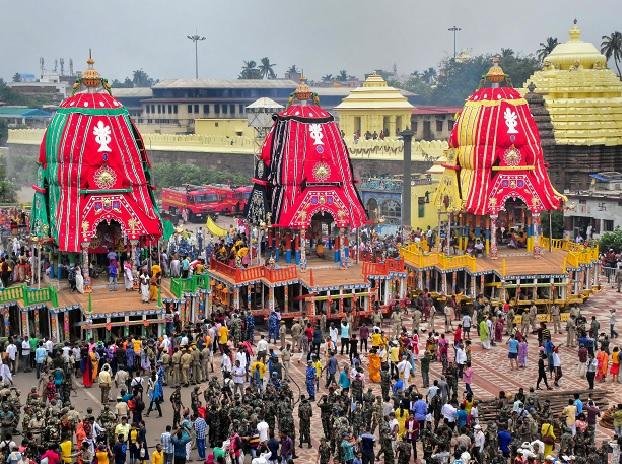
Puri: The Festival of Chariots: Chariots of Lord Jagannath, better known as Ratha Yatra, is celebrated every year at Puri, the temple town in Odisha, on the second (dwitiya) day of shukla pakhya (waxing cycle of the moon) of Āshādha Māsa (3rd month of the Odia calendar). This nine-day festivity, marked by various rituals and traditions, is going to be held from 1st to 9th July 2023, during the rainy season in Odisha. The presiding deities of the Jagannath Temple, Puri’s main temple—Lord Jagannath, Lord Balabhadra, and Goddess Subhadra—with the celestial wheel, Sudarshana Chakra, are removed from the temple in a ceremonial procession to their chariots.
The huge, colorfully decorated chariots are drawn by a multitude of devotees on the Bada Danda, the grand avenue to the Gundicha Temple (Gundicha—King Indradyumna’s Queen), two miles away to the north. On their way back from the Gundicha Temple, the three deities stop for a while near the Mausi Maa Temple (Aunt’s abode) and have an offering of the Poda Pitha, which is a special type of pancake supposed to be the Lord’s favorite. After a stay of seven days, the deities return to their abode. As per the description in the Skanda Purana, among the twelve Yatras of Lord Jagannatha, Ratha Yatra, or Shree Gundicha Yatra, is considered the most famous one. According to the ‘Bamadev Samhita,’ those who can witness four deities on the Simhasana (the sacred seat) of Gundicha Temple for a week, they along with their ancestors, would get a place in the heavenly abode, i.e., Baikuntha, for all time to come. As per this text, those who can hear about this great festival also get the desired result. Besides this, those who study the rituals of the divine festival and make others aware of the same can also get a place in his holy abode. The Ratha Yatra of the ‘four deities’ takes place on the 2nd day of the bright fortnight of Ashadha for the overall well-being of the mankind. In the Skanda Purana, it has been described that no festival of Mahaprabhu is more important than that of the Shree Gundicha Yatra. Because Shree Hari, the supreme Lord of the cosmos, rides his chariot in a very delightful mood to the Gundicha Temple to fulfill his pledged command. As the chariot is a symbol of ‘Sandhini Sakti,’ mere touch of the chariot would confer compassion of Lord Shree Jagannatha on the devotees. The famous verse in this context is as follows: ‘Ratha tu Vamanam drustva punarjanma na vidyate.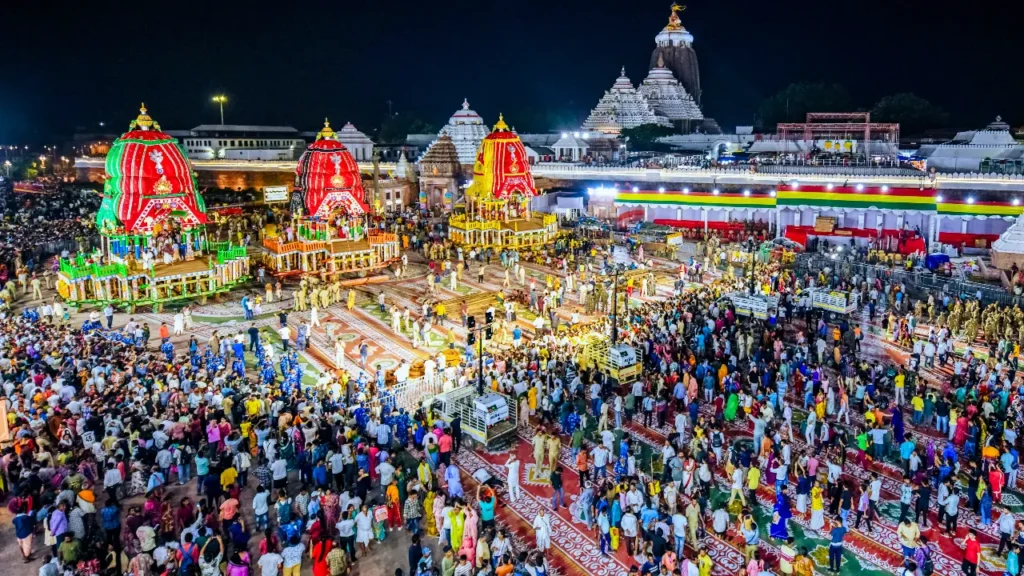
Why do people celebrate Ratha Yatra?
Ratha Yatra is organized in Puri, which is a prime city in Odisha. Devotees believe that Lord Krishna or Lord Jagannath desires to visit Mathura, which is his birthplace. They organize this festival in order to fulfill his desire yearly. Devotees also believe that they are freed from the phase of birth and death if they devotedly take part in this festival. Muslims also celebrate the festival.
How is Rath Yatra Festival Celebrated?
Devotees carry the idols of Lord Krishna, Lord Balabhadra, and Subhadra to Gundicha Temple from Jagannath Temple. The idols are then positioned in chariots. Priests perform Snana Purnima, which is a custom wherein three idols are bathed with water (109 buckets). The bathed idols will be placed in isolation until the procession day. This event is called Ansara. The Odisha’s royal successor performs the ceremony of Chera Pahara. The king carries the divinities and positions them on chariots during the event of Chera Pahara.
History of Rath Yatra: Origins and Cultural Significance
Rath Yatra, or the “Festival of Chariots,” is an important celebration in Puri, Odisha. It started in the 12th century and is dedicated to Lord Jagannath, his brother Balabhadra, and sister Subhadra.
The festival is about the journey of these deities from their temple to another temple, symbolizing their visit to their aunt’s house. It became a celebration where people from all backgrounds come together to show their devotion. The festival is about unity, love for the gods, and cultural pride.
The Role of Lord Jagannath in Rath Yatra
Lord Jagannath is the main focus of Rath Yatra. He is a form of Lord Vishnu. The idols of Lord Jagannath, Balabhadra, and Subhadra are placed on chariots and pulled by thousands of people during the festival.
The idol of Lord Jagannath is made of wood and has large eyes, symbolizing that he sees everything. Pulling the chariot is believed to bring blessings and spiritual peace.
 Key Rituals During Rath Yatra
Rath Yatra is celebrated with several rituals, each full of meaning. Here are the key rituals:
Chhera Pahara:
This is when the King of Puri or a representative sweeps the ground in front of the chariots with a golden broom. This act purifies the path for the deities and shows humility and service.
Pulling the Chariots:
Thousands of people pull the chariots, chanting prayers and songs. This is a way for devotees to show their devotion and feel closer to the Lord. The act of pulling the chariots is also believed to cleanse the soul.
Snana Purnima:
This is the first ritual of Rath Yatra. The idols of Lord Jagannath and his siblings are bathed with holy water. This is done to purify the idols before the journey begins.
Chariot Decoration:
The chariots are decorated with beautiful colors, flowers, and cloth. Each chariot represents the deity it carries and is made to look as grand as possible.
Prayers at Gundicha Temple:
Once the chariots reach the Gundicha Temple, prayers and rituals are offered to the deities. This marks the arrival of Lord Jagannath and his siblings at their aunt’s house.
Return Journey (Bahuda Yatra):
After staying a few days at the Gundicha Temple, the deities return to the Jagannath Temple in what’s called the Bahuda Yatra. This marks the end of the journey and symbolizes the deities returning home after their visit.
These rituals make Rath Yatra a spiritually significant and culturally vibrant event that brings people together to celebrate with devotion.
FAQs About Rath Yatra in 2025
- What is Rath Yatra?
The Hindu and Buddhist communities of India are most closely linked with Rath Yatra, which is translated as ‘Festival of Chariots.’ Every year on this day, thousands of devotees decorate the idols of Lord Jagannath and his siblings and transport them in chariots on a journey of 3 km from the Jagannath Temple to the Gundicha Temple.
- When is Rath Yatra observed?
Rath Yatra takes place on the second day of Ashadha month, or late June or early July, as per the Hindu calendar. ‘Ashadha Shukla Paksha Dwitiya’ is the name given to this day in ancient writings. In 2025, Rath Yatra will be observed on 27 June.
- What is the meaning of Jagannath?
The Sanskrit word ‘Jagannath’ means ‘Lord of the Universe’ in English; Lord Jagannath is considered an incarnation of Lord Vishnu.
- Why is Rath Yatra observed?
According to legend, Lord Jagannath travelled to Gundicha Temple on this day through the Mausi Maa Temple, which was the home of his maternal aunt. He went there with his sister Subhadra and older brother Balabhadra. Therefore, the day is observed annually with a Jagannath Rath Yatra, during which the idol of the Lord and his two siblings is placed on a chariot. The massive significance of the procession is felt throughout India.